October 14th, 2025
news
Why offshore charging can anchor maritime decarbonisation
By Sune Strøm, Senior Regulatory & Public Affairs Manager Stillstrom
Copenhagen, Denmark – October 14, 2025
The IMO’s decision to delay adoption of the Net-Zero Framework has created fresh uncertainty for global shipping. But even as regulation lags, opportunities for progress remain. Offshore wind operations and regional shipping can take the lead through vessel electrification, proving that decarbonisation doesn’t have to wait. Offshore vessels such as service operation vessels (SOVs) in wind farm operations, as well as regional commercial routes, can lead the way through electrification.
In this article, Stillstrom’s Sune Strøm, Senior Regulatory & Public Affairs Manager, explores how SOV electrification and offshore charging can accelerate the decarbonisation of offshore wind logistics by using electricity generated from the wind at sea instead of fossil fuels. With proven expertise in offshore charging, Stillstrom demonstrates that these innovations are not driven solely by net-zero ambitions. They also cut fuel costs, improve energy efficiency, and, most importantly, deliver tangible business value for offshore wind farm owners.
On 14 October 2025, the International Maritime Organization (IMO) decided to postpone adoption of the Net-Zero Framework (NZF) until its next Marine Environment Protection Committee (MEPC) session in 2026. This delay leaves the maritime sector without the binding global fuel standard, emissions pricing mechanism and Net-Zero Fund that many had hoped would provide clarity and direction.
For an industry already under pressure to accelerate climate action, this postponement represents a missed opportunity to ensure a level playing field across nations and vessel owners. Regulation sets the tone, and without global agreement, the risk of fragmentation and delays increases. Yet the need for action has not gone away.
While global regulation shapes the pace for ocean-going vessels, offshore wind farm owners have a unique advantage. They can leapfrog the electrification and decarbonisation curve for their SOV operations, drawing directly on their own abundant, cost-competitive renewable energy. Every turbine installed, serviced, and maintained today relies on SOVs that typically run on fossil fuels. SOV operations account for around 15–20% of total offshore wind lifecycle emissions, creating a striking carbon paradox. The very projects designed to decarbonise our energy system are today reliant on fossil, often imported fuels, for their service vessel operations.
By electrifying SOVs and enabling offshore charging, the sector can break this dependency and lead the maritime sector by example in delivering a truly net-zero energy future.
What this means for offshore wind energy and SOVs
While the IMO outcome delays global consensus, regional regulations are already driving the transition. In Europe, the EU Emissions Trading System (ETS), FuelEU Maritime, and the UK ETS are placing a price on maritime greenhouse gas emissions, directly affecting offshore SOVs above 5,000 GT. By including the maritime sector within their respective seas and ports, the EU and UK are creating a clear economic signal, incentivising SOV owners and operators to decarbonise their vessel operations.
At Stillstrom by Maersk, we are not waiting for regulation to lead. We continue to pioneer offshore charging and vessel electrification, proving that real decarbonisation is possible today. Together with like-minded companies, we will continue to innovate and make maritime electrification happen. Offshore wind farms are a good place to start as the grid infrastructure is already in place, and it is relatively easy to connect a charger to the internal grid in the offshore wind farm.
Much of the debate in shipping has centred on green fuels: e-methanol, e-ammonia, and, to a lesser extent, hydrogen. These fuels will play a role, but they require complex production chains (renewable power, electrolysis, conversion, storage) that make them expensive and resource-intensive compared to direct electrification of battery-powered vessels.
Direct electrification is simpler, and for smaller and medium-sized ships, the economics already stack up. Independent studies show that where batteries are viable, they are cheaper than e-methanol.² And, as we have seen in road transport, the debate between hydrogen and batteries is quickly tilting in favour of direct electrification.
The same shift is beginning in shipping. Some ferries are already operating on battery power. Container feeders could be next. With the right infrastructure, the opportunity only grows.
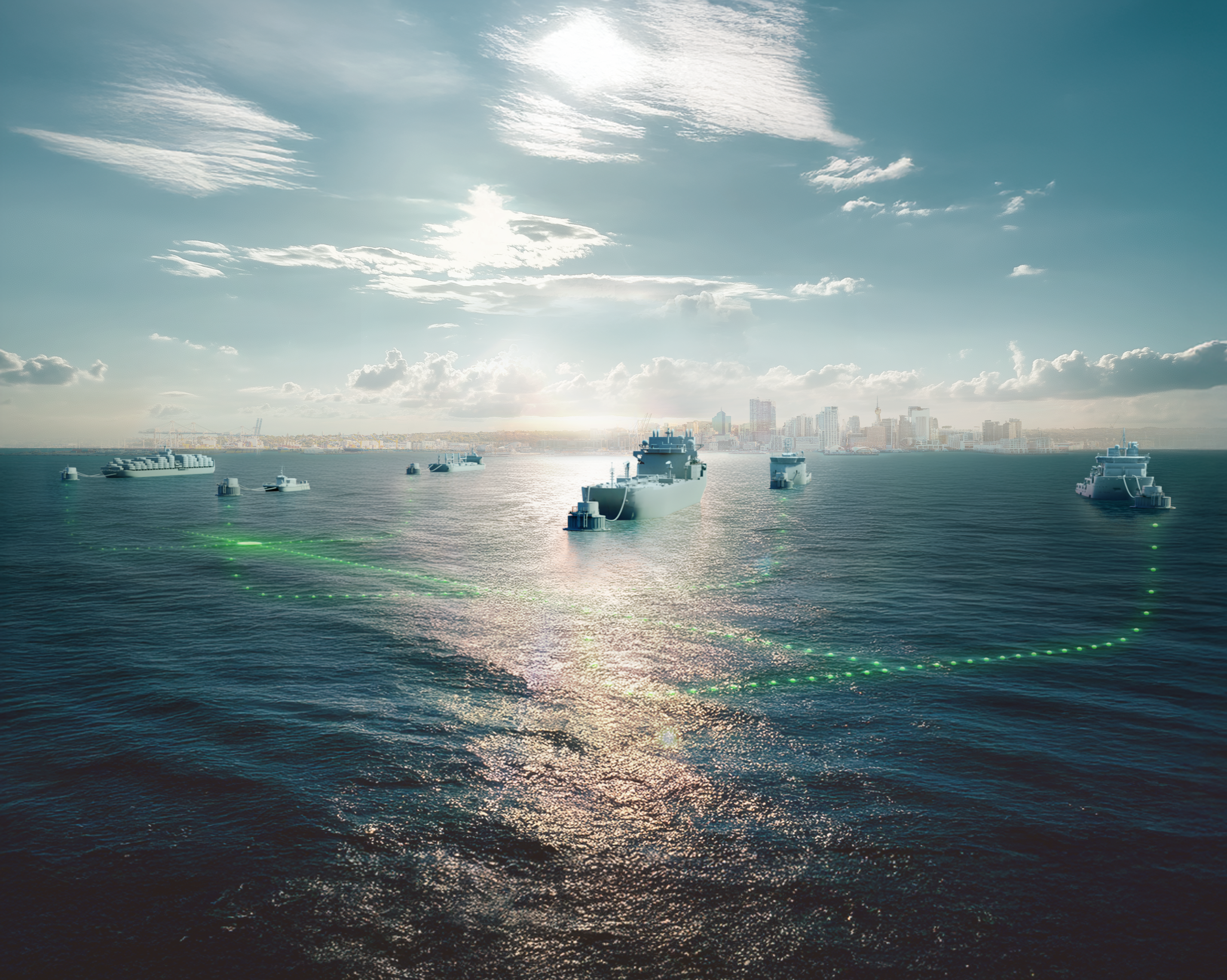
That infrastructure is where companies like Stillstrom come in. We don’t build vessels or batteries; we provide the charging solutions that enable maritime electrification. Offshore charging points reduce the need for oversized onboard batteries⁴, cut capital costs, and extend vessel range, just like highway fast chargers for EVs. They can integrate directly with renewable generation, such as offshore wind farms, helping ships charge with zero-carbon electricity produced and delivered at sea.³
Studies with ScottishPower Renewables and various offshore charging solution providers like Stillstrom have already shown that offshore charging is both technically feasible and commercially attractive. For operators, it means lower operating costs, less exposure to volatile fuel prices, and a future-proofed fleet ready for the tightening regional and potentially global greenhouse gas emission regulatory landscape.²
The bigger picture
Stillstrom is only four years old, but our mission is clear: to enable the maritime electrification of SOVs and other vessels by providing reliable power supply and offshore charging infrastructure. The technology is ready. The economics are strengthening.
And even though the IMO has chosen to delay adoption of the global Net-Zero Framework, the direction of travel is undeniable.
National and regional policies, combined with investor and customer expectations, mean emitting GHGs at sea is only going to get more expensive. Electrification is not just the cleaner option, it is fast becoming the smarter one, despite the disappointing outcome of the recent IMO meeting.
Key references and supporting evidence:
1) The IMO’s Net-Zero Framework – FAQs - imo.org
2) ScottishPower, MJR, and Oasis studies (commissioned by ScottishPower Renewables) scottishpowerrenewables.com
3) ScottishPower and Stillstrom white paper “Electrification of Service Operation Vessels” scottishpowerrenewables.com
4) “Coordinated Planning of Offshore Charging Stations and Electrified Ships: A Case Study on the Shanghai-Busan route” arXiv
About Stillstrom by Maersk
Stillstrom by Maersk is dedicated to decarbonise the maritime sector with offshore charging technologies, providing innovative solutions to reduce emissions and enhance the sustainability of maritime operations.
Media Enquiries
For media enquiries please contact:
Sine Brandt
Head of Marketing & Communications at Stillstrom by Maersk