February 6th, 2026
news
Engineering her own path into offshore wind and beyond
Stillstrom People Profiles
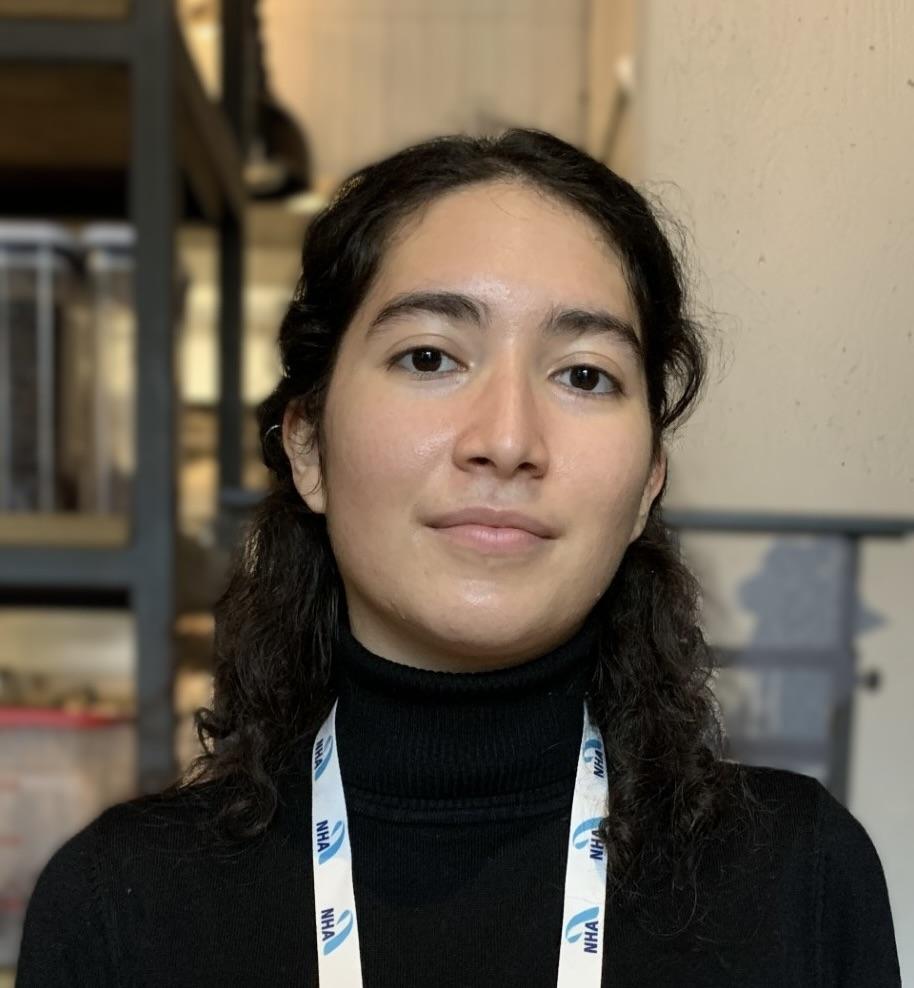
Adriana Torres Rodriguez didn’t always see herself as an engineer, and that’s exactly why her story matters.
Now a Solutions Engineer at Stillstrom, Adriana’s journey into STEM has been shaped by curiosity, resilience and a willingness to step into the unfamiliar. To mark this year’s International Day of Women and Girls in STEM, we spoke with Adriana about her career so far, her role at Stillstrom and what it’s like to forge your place in a male-dominated industry in 2026.
Tell us about your role at Stillstrom and how you came to join the team?
I first started working at Stillstrom almost two-years ago as a Student Assistant while studying for my master's in Wind Energy at DTU (Technical University of Denmark). I was actively looking for a position in offshore wind, which would tie into my studies, when I came across the role at Stillstrom. What really appealed to me about the company and the work they do is that they are an innovative business working adjacent to the offshore wind industry. With my wind energy educational background, Stillstrom’s mission to decarbonise the maritime sector through its propriety vessel charging systems for electric and hybrid ships, really resonated with me.
During my time as a Student Assistant, I worked closely with our Head of Solutions Engineering, Rune Jensen. Now, after finishing my studies, I’m working within the team as a Solutions Engineer, focusing currently on our upcoming feasibility study.
What projects are you currently involved with?
A recent project that I worked on was our whitepaper with the Port of Roenne, which explored how Energy Island Bornholm could serve as a blueprint for integrating offshore wind energy with maritime electrification. Being involved in this has been a really positive experience, getting to work across teams and contribute to new initiatives.
The whitepaper is due to be published in Q1 of this year. With Denmark and Germany recently agreeing to invest and deepen cross-border co-operation on offshore wind and energy security, it’s an exciting time to be releasing the findings of our study.
Have you always had an interest in engineering? Do you remember when or what sparked this?
It’s actually the opposite! I didn’t decide I wanted to pursue a career in engineering until my senior year of high school, despite it being what my dad does for a living. I enjoyed history and literature classes, but science was always the one that stood out to me for the longest time, so I thought I would either go on to study pre-med to become a doctor or do some type of medical research.
It wasn’t until I took an advanced physics class in my last year of high school that I considered an engineering career. It was very project-based. So, on top of the exams and all the theoretical knowledge, there was a really fun interactive aspect to the course.
But by this stage, I’d already begun applying to schools for college. I ended up finding a really great Naval Architecture and Marine Engineering programme at the Webb Institute in New York, which ticked everything I was looking for.
Have you faced any challenges as a woman in STEM, and how did you overcome them?
Going into my studies, I wasn’t completely sure that engineering was the right path for me. One of the biggest barriers was that I had never really been able to picture myself in that role. Even though I was performing well academically and knew I was capable, it still felt a bit out of reach.
Part of that uncertainty came from the fact that engineering is still such a male-dominated field. In the US, I’m also part of a minority group and there were times when I was the only Latina in my classes. That experience made it harder to feel like I naturally belonged in that space.
Ultimately, I had to make a conscious decision to pursue engineering. It wasn’t the first path I imagined for myself, but I chose it intentionally. Overcoming those doubts meant trusting my abilities, accepting that I deserved to be there, and moving forward even when I didn’t always see others who looked like me.
Did you have any role models or mentors who influenced your journey into STEM?
It’s been a long journey, but I’ve been very fortunate to have strong support along the way. My family always believed in me. There was never really any doubt in their minds that I could pursue this field. My parents and siblings were fully behind me following this educational path, and that made a huge difference. Having that foundation of support made everything feel more possible.
I also found encouragement within my peer group and school community. Because my school was small, there was a lot of interaction with alumni and they were genuinely invested in seeing students succeed. We had a formal mentorship programme, but I also reached out on my own to an alumnus who now works in the offshore wind industry. Since my shipping school only has a small number of graduates who go into offshore wind, most pursue other areas of maritime, connecting with her felt especially meaningful. Seeing someone who had taken a similar path helped me better understand what was possible for me.
The close-knit environment at my school played a big role in my experience. The professor-to-student ratio was small, so I didn’t have the experience of sitting in huge lecture halls with hundreds of students competing for attention. Instead, it was me and 27 classmates. That made it much easier to build relationships with professors, ask questions, and get personalised guidance.
Overall, having mentors, accessible faculty, and a supportive community strongly influenced my journey into STEM. Those relationships helped me build confidence and see a clearer path forward.
What advice would you give to girls or young women considering a career in STEM?
My advice to girls and young women considering a career in STEM is this: there will be moments when you feel completely out of your depth. Sometimes that’s because you really are stepping into something new and challenging. But that’s also exactly how growth happens.
When opportunities come your way, they might feel intimidating, but they can also be the doors that lead to the next step in your career. I’ve experienced that myself. For example, I once had an internship at a research institute that completely changed how I saw my own capabilities. Before starting, I had shared my interest in offshore wind, and they offered me two project options. In one, I would support a researcher who was working with a client. In the other, I would actually lead a study myself.
At the time, I was still in my bachelor’s programme, and the idea of leading a project felt overwhelming. I remember thinking, “This is a real job with real responsibility - can I actually do this?” I hadn’t worked in that kind of professional setting before, and I would have to learn new software and apply my knowledge in ways I hadn’t tested yet.
But choosing the more challenging path turned out to be one of the most important decisions for my growth. It pushed me to trust my abilities, learn quickly and prove to myself that I was capable of more than I thought.
So, my advice is don’t shy away from opportunities just because they scare you. Feeling unready doesn’t mean you’re incapable.
If you could go back and give your younger self one piece of career advice, what would it be?
It would be that all the hard work really is worth it. There will be moments when you doubt yourself and question whether pushing so hard is necessary. At the same time, it’s important to take advantage of opportunities when they come and to embrace experiences fully.
Don’t skip out on socialising and making fun memories outside of your studies or work - those moments are just as important. Ultimately, the sacrifices you make along the way will pay off, especially if you have a clear vision for your future. And even if that vision isn’t fully formed yet, things often fall into place in ways you might never have anticipated.
The key is to trust the process and keep moving forward. The effort you put in now will shape the opportunities and growth you experience later.
What excites you most about the future of your field?
Stillstrom is in such a special place with it being an innovative start-up. To be able to be part of that journey from such an early stage and look back in say five or 10 years when this offshore charging technology takes root in the way I believe it will, will be very rewarding. That’s what drew me to offshore wind in the first place. I thought it would have a huge boom in the United States at the moment when I was studying and I really wanted to be part of the emerging industry there. And Stillstrom has the same ethos.
About Stillstrom by Maersk
Stillstrom by Maersk is dedicated to decarbonise the maritime sector with offshore charging technologies, providing innovative solutions to reduce emissions and enhance the sustainability of maritime operations.
Media Enquiries
For media enquiries please contact:
Sine Brandt
Head of Marketing & Communications at Stillstrom by Maersk