August 6th, 2026
news
Why the true value of grants sits far beyond money
Why the true value of grants sits far beyond money
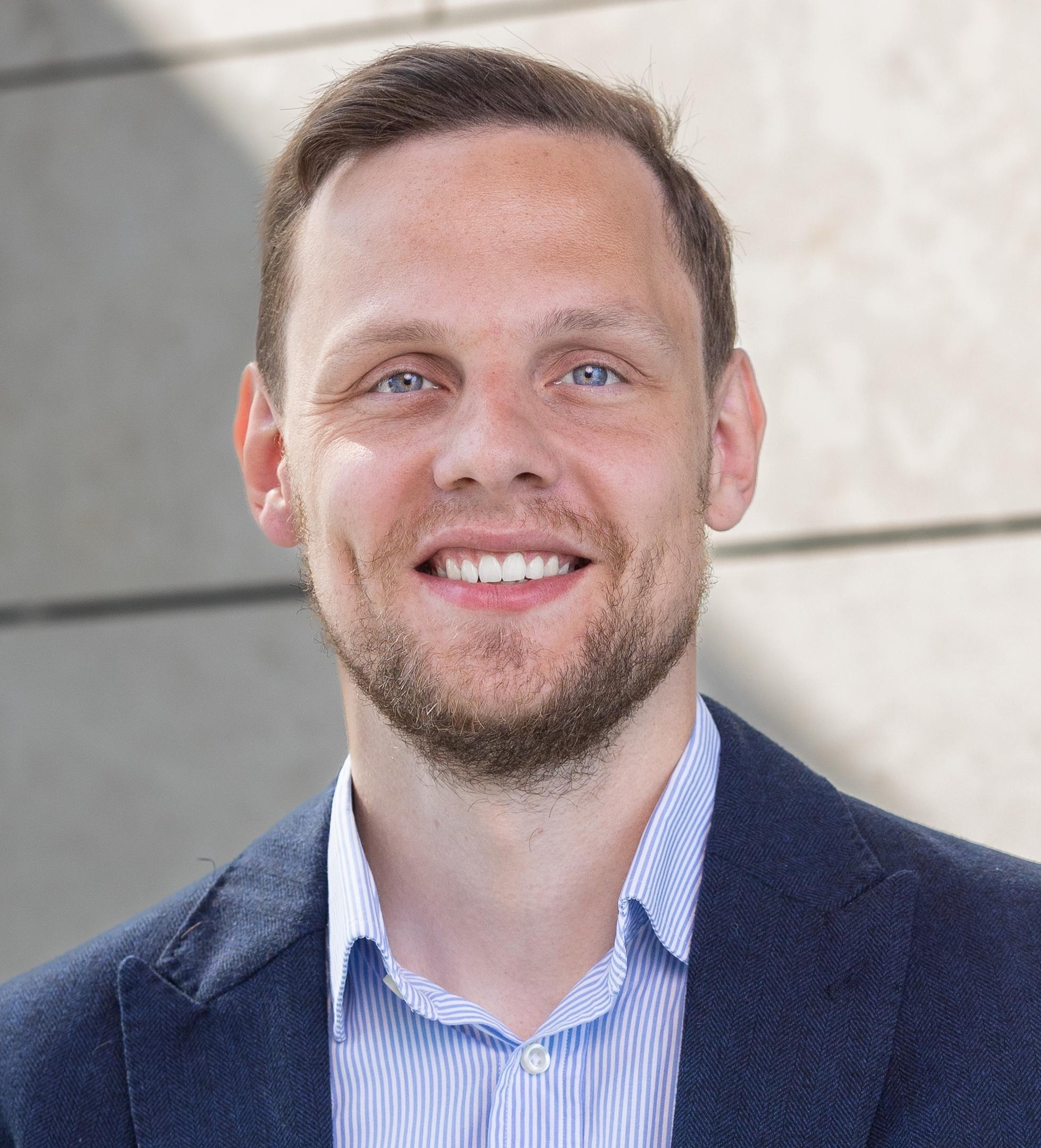
By Alexey Kraynov, Stillstrom’s Senior Finance Business Partner
Grants are often viewed as a source of funding. In practice, they are a mechanism for accelerating credibility with the wider market, strengthening delivery and reducing uncertainty and enabling collaboration at the point where it matters most.
And in markets undergoing structural change, that combination, that perception, can determine not just whether innovation succeeds, but how quickly.
For scale-up companies specifically, grants are often described in financial terms - total award value, percentage of costs covered or the size of the funding package.
But that framing only captures part of the picture. The real significance is not the capital itself; it is the legitimacy and confidence building credibility that comes with it.
When public institutions commit funding to a technology, it follows extensive technical, commercial and policy scrutiny. What is being assessed is not just whether something works, but whether it has a role to play in the future of an industry. In many cases, it also signals alignment with future regulatory direction, particularly in sectors where government policy will shape how and when technologies are adopted.
That distinction matters because in early-stage markets, where commercial signals are still forming, that kind of endorsement can accelerate progress in a way that funding alone cannot.
In regulated industries, this also reduces uncertainty not just technically, but from a policy and compliance perspective - helping customers and partners understand that a technology is moving in step with future regulatory frameworks, not against them.
Grants also introduce a level of structure that is often underestimated. Milestones, reporting requirements and cost eligibility criteria create discipline around how projects are delivered. For growing businesses, that discipline can be as valuable as the funding itself.
There is also the question of collaboration. Grant programmes, particularly at consortium level, bring together partners across industry, research and the public sector. That mix accelerates knowledge exchange and stress-tests assumptions in ways that internal development alone rarely does. For Stillstrom, that collaborative dimension has been a consistent feature of how we approach grant-funded work.
Our own experience reflects that.
In 2020, Stillstrom by Maersk secured its first grant, 22,3M DKK (~3M EUR) through Denmark’s Energy Technology Development and Demonstration Programme (EUDP). At the time, our technology was still in its early stages and focused on our now branded Charging Buoy offshore solution for lower emissions marine charging, designed to provide offshore power to vessels at anchor and reduce emissions from idling operations.
The programme was structured on a reimbursement basis, with funding covering approximately 25% of relevant project costs paid out in three installments. While modest in percentage terms, it enabled sustained engineering, testing and validation over several years, allowing Stillstrom to become established as a standalone company.
More importantly, it placed the technology within a nationally supported framework at a formative stage, aligned with Denmark’s wider decarbonisation ambitions. That helped shift how it was perceived externally, from an early concept to something with recognised potential.
The programme enabled real-world testing and iterative development, allowing the technology to evolve based on operational insight rather than assumption. It also required the establishment of robust governance around cost control, reporting and delivery, accelerating organisational maturity and supporting Stillstrom’s transition into a standalone entity capable of delivering complex programmes.
As the project progressed, the market moved.
The original focus on offshore idling power expanded as the maritime sector accelerated towards electrification. The opportunity shifted towards offshore charging and broader energy transfer at sea, and the technology evolved accordingly.
What began as a single Charging Buoy concept has since developed into a broader offshore charging platform, structured around four deployment applications: Wind Turbine Generator, Substation, Monopile and Buoy, each designed to meet different site conditions and infrastructure requirements.
That evolution reflects a wider reality for innovation. Initial assumptions rarely hold. Relevance depends on the ability to adapt without losing execution momentum.
With the EUDP programme completed and final funding received, the business moves forward with a validated technology and a stronger operating model.
But perhaps just as importantly, it moves forward with a clearer understanding of how to use grants as a strategic tool.
That is why we are continuing to invest time in this space. Most recently, as part of an eight-partner consortium we are leading, a €5 million grant from the European Union’s flagship Horizon Europe research and innovation programme was secured to develop and demonstrate charging infrastructure for stationary vessels at anchor with their engines running, while targeting cuts to greenhouse gas emissions. This is just one of many technology and deployment projects we are collaborating on globally and across Denmark, Europe and the UK, several of which could potentially be funded by grants.
For Stillstrom, this is the point. Grants are not something we pursue for their own sake, but a tool we use deliberately, where the strategic fit is right. As the market matures and the pace of change accelerates, that discipline will matter more, not because it unlocks funding, but because it earns the credibility to move faster than the market alone would allow.
To find out more about Stillstrom’s offshore charging solutions, you can contact us here: https://stillstrom.com/about/contact
About Stillstrom by Maersk
Stillstrom by Maersk is at the forefront of decarbonising the maritime sector with its pioneering offshore power and charging solutions. The company’s mission is to reduce vessel emissions in the offshore wind supply chain. Its integrated charging systems enable hybrid and electric vessels to plug into low-emissions electricity while offshore.
Owned by Maersk, the business was founded in 2019 as an innovation project and became an independent company in 2022. The company employs more than 30 people at its headquarters in Copenhagen (Denmark) and Aberdeen (UK).
Media Enquiries
Issued by BIG Partnership on behalf of Stillstrom.