June 26th, 2026
news
What's holding maritime electrification back?
What's holding maritime electrification back?
By Nikolaj Stald, Chief Commercial Officer, Stillstrom
I've spent the past few years hearing the same questions about maritime decarbonisation. Is the technology mature enough? Are the costs viable? Can charging infrastructure actually work in an offshore environment?
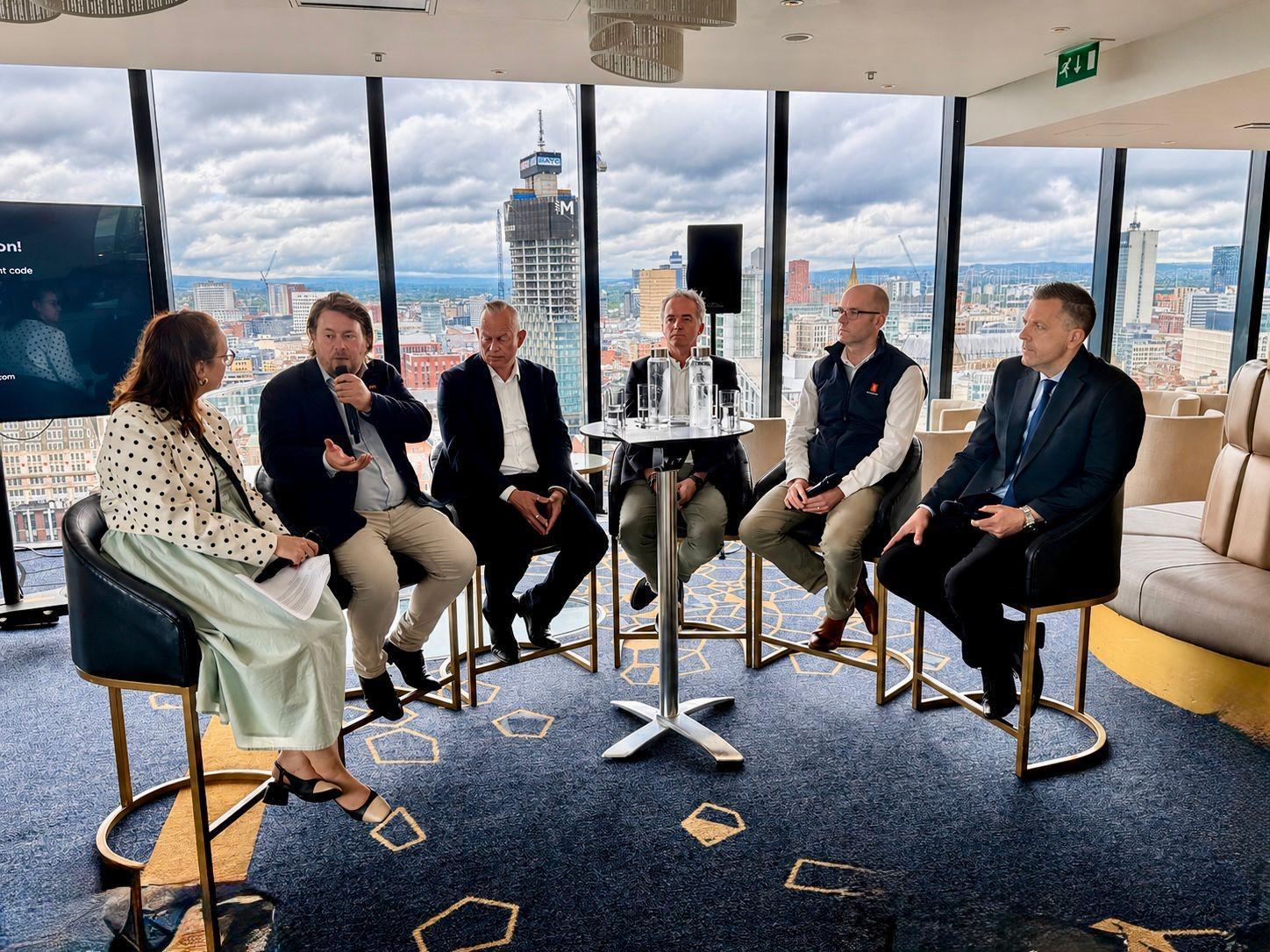
At the Global Offshore Wind conference in Manchester last week, those questions barely came up, the conversation has moved on. What the industry is now wrestling with is not whether offshore power and charging works, but how to create the conditions for it to be deployed at scale. That is a different problem, and in some ways a more tractable one.
Sitting alongside colleagues from Bibby Marine, Corvus Energy, Tidal Transit and Kongsberg Maritime, there was clear consensus across the room. Battery technology has advanced and ship designs are being built around electrification from the keel up. Offshore power and charging systems exist and are operational. The commercial case, particularly when you factor in fuel price exposure and rising carbon costs under schemes like EU ETS, is becoming harder to argue against.
Bibby Marine's first eCSOV is under construction and due in service in 2027, a commercial vessel built to operate in the North Sea. As Kevin Brown, the company’s Commercial Director, put it during the panel, the commercial picture is changing, not just the environmental one - the technology question is answered.
Where the real friction is
The barriers that remain are structural, and three stand out.
1. Offshore electricity access is still not straightforward. Getting power to a vessel at an offshore location requires navigating questions of grid connection, ownership and commercial arrangement that are not yet well-defined. Until those pathways are clearer, project developers and vessel operators are working around uncertainty rather than planning with confidence. Stillstrom published a whitepaper last week with Baltic Energy Island Foundation and Port of Rønne that speaks directly to this challenge. Bornholm Energy Island: Powering Maritime Electrification sets out how planned offshore wind farms and grid infrastructure around Bornholm could serve as a blueprint for large-scale maritime electrification, both in ports and at sea. It also introduces the concept of Offshore Power Zones, where vessels access electricity directly at sea for hotel loads or battery charging. Together, these could form a green shipping highway stretching from the English Channel through the North Sea and into the Baltic.
2. Charging infrastructure is not yet embedded in project planning. For offshore electrification to work at scale, charging needs to be considered at the design stage of a wind farm, not retrofitted as an afterthought, although this is achievable also. That requires developers to engage earlier and take a view on infrastructure that sits outside their traditional scope.
3. Regulatory clarity is lagging the technology. The standards and frameworks that give operators confidence to commit capital are still catching up. That is not unusual for an emerging sector, but it is the main thing slowing deployment right now. There is more to say on standards specifically - watch this space.
What needs to happen
None of these are insurmountable, they are coordination problems, not technical ones.
Regulators need to move with more urgency as the sector cannot wait another five years for frameworks that should, in principle, be straightforward to establish. Developers need to bring charging into project conversations earlier, treating it as infrastructure rather than a supplier decision. And industry players, including Stillstrom, need to keep making the commercial case clearly and specifically, so that the business logic is not lost in the broader noise around decarbonisation.
The E-Mission Zero panel at Global Offshore Wind was a useful signal of where the industry has got to. Cross-sector alignment on what the problems are, and what the solutions look like, is further along than it was 18 months ago. E-ships are being built and the offshore power and charging solutions exist and are proven. The next 12 months will show whether the policy and commercial frameworks can move fast enough to meet them.
About Stillstrom by Maersk
Stillstrom by Maersk is dedicated to decarbonise the maritime sector with offshore power and charging technologies, providing innovative solutions to reduce greenhouse gas emissions (GHG) in the maritime industry. Owned by A. P. Moller – Maersk, the business was founded in 2019 as an innovation project and became an independent company in 2022. The company employs more than 30 people at its headquarters in Copenhagen (Denmark) and Aberdeen (UK)
For more information, visit Stillstrom
Media Enquiries
Issued by BIG Partnership on behalf of Stillstrom and its partners.