May 21st, 2026
news
Navigating a career as a woman in the maritime industry
Navigating a career as a woman in the maritime industry
I proved to myself that I didn't have to choose between being a mother and being a maritime professional, I can be both
As the maritime industry sails towards a more sustainable and inclusive future, the voices and experiences of women at sea and ashore have never been more important.
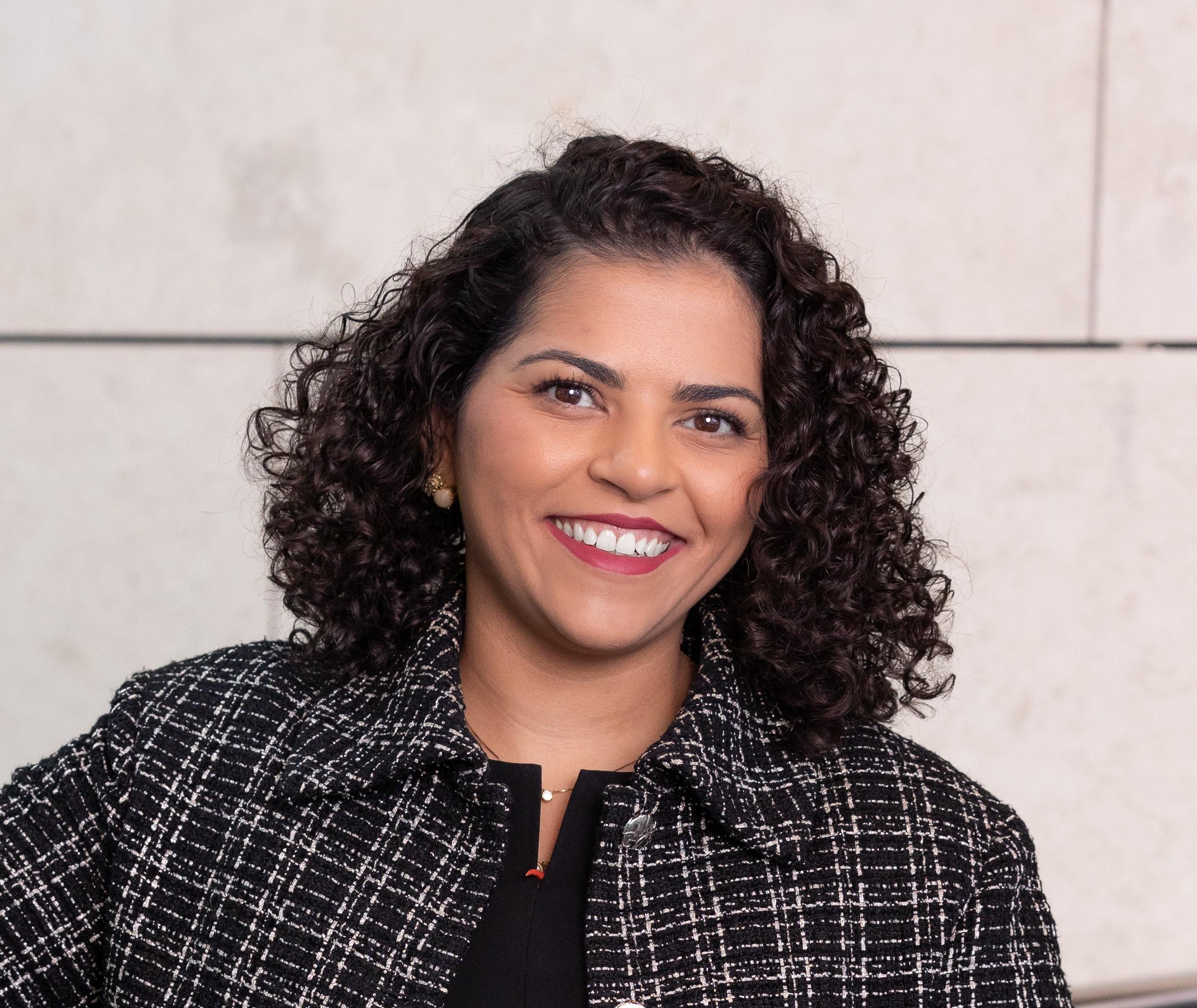
For this year’s International Day for Women in Maritime, we spoke with Marcelly, whose career journey has taken her from the engine rooms of offshore vessels in Rio de Janeiro as a marine engineer to the forefront of maritime innovation as Business Development Manager at Stillstrom.
In this blog, Marcelly reflects on her journey from sea to shore, the realities of being a woman in a traditionally male-dominated industry and why creating sustainable career pathways for women is essential to the future of maritime.
Can you tell me a bit about your own journey into maritime - what drew you to the industry in the first place?
My journey began with an interest in complex machinery and the maritime industry. I am from Rio de Janeiro, and every time you’re in town, you can see all kinds of vessels at the port or anchored by the Guanabara Bay. Seeing them all the time is exactly what made me want to figure out how I could work on board.
Because of that, I ended up studying Marine Engineering at the Brazilian Navy, which laid a solid technical foundation for a maritime career. But what really cemented my passion was sailing as an engineering cadet with Maersk. I was lucky enough to be one of the first female cadets from Brazil to do that.
Getting that raw, hands-on experience in the engine room and understanding the mechanics that move global trade completely hooked me. After that, I spent years working offshore along the Brazilian coast on everything from PSVs and ROVs to multi-purpose vessels.
What’s something you wish you’d known when you first started out?
I wish I had known that stepping away from the sea doesn't mean your maritime career is over. When you are working on board, the path feels very traditional. I didn’t realise back then how valuable all that hands-on work in the engine room would be when I eventually moved to the commercial side of the business.
What has your experience as a woman in maritime been like and has it changed over time?
When I started out, I was often the only woman in the engine room. Being one of the first female cadets meant I had to pave my own way, and sometimes that meant working twice as hard to prove my technical competence.
Over the years, things have definitely improved.
Today, while we still have work to do, I see more women not just entering the industry, but stepping into senior leadership, technical innovation and commercial roles. The conversation has moved from "Why is a woman here?" to "How can we get more women here?"
What does an inclusive workplace actually feel like to you, day to day?
Day to day, it just feels like trust. In my role now as a Business Development Manager at Stillstrom, we are driving forward-thinking offshore charging projects that require a heavy mix of technical understanding and commercial strategy.
For me, true inclusion means that my background as a former marine engineer is respected the second I walk into a meeting. I don't have to over-explain or "prove" my technical competence before my business ideas are taken seriously. It also means having an environment that genuinely supports flexibility. As a mother balancing a demanding career in green innovation, inclusion means being able to manage both parts of my life without anyone ever questioning my dedication to the job.
We hear a lot about gender-based policies and commitments. When did you first feel those things becoming real in your day-to-day work?
It became very real for me when I faced one of my hardest career decisions: stop working onboard vessels when I was pregnant with my son, Thomas. It felt like a massive turning point. But when I transitioned to the Danish maritime market in 2016 to work in sales and business development, I experienced a culture where policies translated into actual support. I was given the space to pivot my hands-on operational experience into commercial value, proving that stepping ashore to raise a family didn't mean stepping down in my career.
In your experience, how does having more diverse teams actually change the way work gets done?
Diverse teams naturally break down echo chambers and challenge the illusion that everyone has to agree all the time. When you bring together people from different genders, nationalities, and professional backgrounds, you stop solving problems the way they’ve "always been solved." The discussions are more robust and creative, and the solutions are more innovative because they’ve been pressure-tested from multiple perspectives.
Have you seen situations where different perspectives made a real difference? Maybe in safety, problem-solving, or innovation?
Absolutely, especially when bridging the gap between operations and commercial development. My time working onboard gave me a distinct perspective when I moved into business development. When you are looking at new technologies, like offshore charging infrastructure, engine retrofits or emission-saving devices, having someone who knows the physical realities of the vessel and the daily life of the crew completely changes how a product is developed and sold. It grounds innovation in practical reality.
Who or what has helped you most along the way?
I’ve been lucky enough to have mentors early on who trusted me with responsibilities that pushed my boundaries. But honestly, my own adaptability has been my greatest tool. The drive to show that a woman can thrive in a heavy-duty offshore environment, and later, the determination to reinvent myself commercially after having my son, kept me moving forward.
What changes are you most excited about seeing in maritime right now?
The massive push toward decarbonisation and renewable energy. We are in the middle of an important transition. Whether it's developing offshore charging capabilities or figuring out how to run global fleets on alternative fuels, the industry is fundamentally reinventing itself. It is exciting to be at the intersection of maritime operations and environmental sustainability right now.
What still needs to happen to make this industry a place where more women want to stay and grow?
We need better, clearer transition pathways for women at sea who want to start families. Making the decision to step away from a seagoing career shouldn't feel like an end point. The industry needs to actively recruit former female seafarers into shore-based management, engineering and commercial roles, showing young cadets that they have a long-term, sustainable career path in maritime, whether they are at sea or ashore.
If a young woman were considering a career in maritime today, what would you say to her?
Go for it. The industry needs more of our voice, our perspective, and our skills. Build a strong technical foundation, don't be afraid to get your hands dirty, and remember that your career can take many shapes. The maritime world is vast, and there is absolutely a place for you to lead in it.
What are you most proud of, either in your own journey or in the progress you’ve seen around you?
I am incredibly proud of my professional journey from being a marine engineer cadet in Brazil to navigating the transition to the Danish maritime sector. It wasn’t easy to leave the life of a seafarer when I had my son, but I am proud that I successfully translated my sea-time experience into a solid commercial career driving sustainability and business development. I proved to myself that I didn't have to choose between being a mother and being a maritime professional, I can be both.
Media Enquiries
Issued by BIG Partnership on behalf of Stillstrom.
About Stillstrom by Maersk
Stillstrom by Maersk is at the forefront of decarbonising the maritime sector with its pioneering offshore power and charging solutions. The company’s mission is to reduce vessel emissions, the largest source of CO₂ in the offshore wind supply chain. Its integrated charging systems enable hybrid and electric vessels to plug into low-emissions electricity while offshore.
Owned by Maersk, the business was founded in 2019 as an innovation project and became an independent company in 2022. The company employs more than 30 people at its headquarters in Copenhagen (Denmark) and Aberdeen (UK).